This post contains affiliate links. As an Amazon Associate I earn from qualifying purchases.
Thanksgiving Cooking Dull Knife Fix: Sharpen the Knife You Already Have
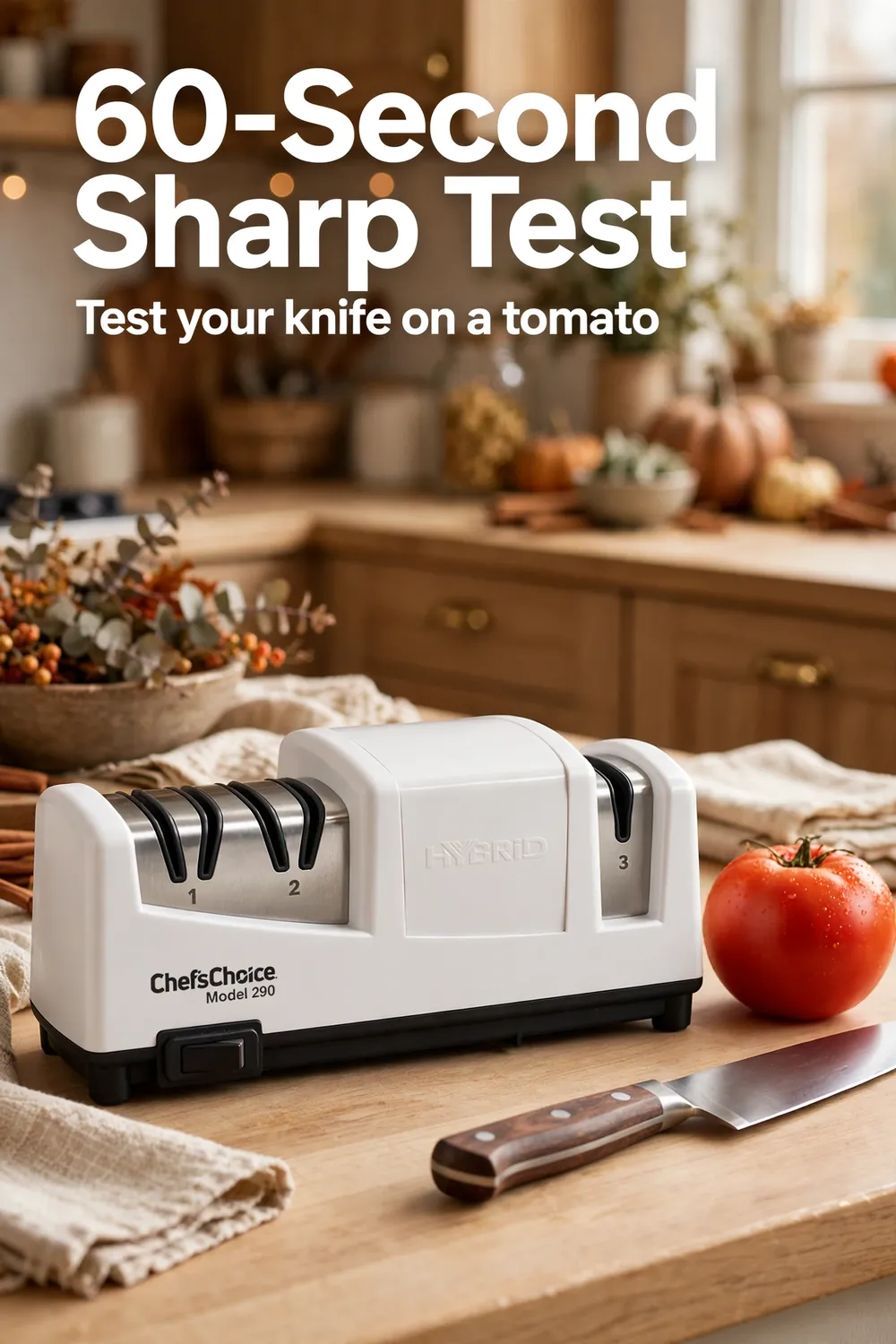
Here is the whole Thanksgiving cooking dull knife fix in one sentence: run the 60-second tomato test on your chef's knife, and if it fails, sharpen it at home with a 3-stage sharpener like the Chef'sChoice Hybrid before you touch the turkey. You don't need a new knife set.
Most "bad" knives are simply dull knives. A dull edge is why onions get crushed instead of sliced, why butternut squash feels like chopping firewood, and why the carving knife skids across crispy turkey skin. Thanksgiving falls on Thursday, November 26, 2026, so there is still time to fix this in one evening.
Why a dull knife makes Thanksgiving harder
Thanksgiving is the biggest knife day of the year for a lot of home cooks: celery and onions for the stuffing, potatoes, squash, apples for pie, fresh herbs, and finally the bird itself. When the edge is dull, every one of those jobs takes more force.
More force means less control. A dull blade is more likely to slip off the curved side of an onion or glance off slick, roasted turkey skin, and that slip tends to happen right when your hand is pressing hardest. A sharp knife goes where you aim it with light pressure, which is calmer and safer in a crowded holiday kitchen. That is the real reason to sharpen before carving the turkey: not to look like a chef, but to keep the knife on track.
The 60-second tomato sharpness test
You don't need special tools to check an edge. A ripe tomato is one of the most honest tests in the kitchen, because its smooth, slippery skin resists a dull blade.
- Set a ripe tomato on a cutting board and steady it lightly from the side, fingers well away from the blade's path.
- Rest the middle of the knife edge on top of the tomato. Do not press down.
- Draw the knife gently toward you, letting only the weight of the blade do the work.
- Watch what happens. If the edge bites into the skin right away, it's sharp enough. If it slides, dents or squashes the tomato, it needs sharpening.
Test every knife you plan to use on the day: chef's knife, paring knife and carving knife. The whole check takes about a minute, and the tomato goes straight into a salad.
Sharpen instead of buying a new knife set
When knives feel useless, it's tempting to buy a whole new block. But a new set doesn't solve the underlying problem: every knife goes dull with use, including brand-new ones. A few months later you would be back where you started, with more knives to store and care for.
Sharpening restores the edge on the knives you already know. A home sharpener turns it into a two-minute habit instead of a once-a-decade replacement. And honestly, one good chef's knife, a paring knife and a carving knife cover nearly all of Thanksgiving.
There are exceptions. Replace a knife with a broken tip, a cracked handle, a loose blade or deep chips along the edge. If you own a specialty knife whose maker recommends a specific sharpening method, follow that advice.
The Thanksgiving cooking dull knife fix, step by step
Here is the routine with a 3-stage sharpener. The Chef'sChoice Hybrid has two larger slots on the left for sharpening and one small slot on the right for the final edge. Read the manual that comes with your sharpener first; it explains how many pulls to use and which slots suit your knives.
- This weekend: tomato-test every knife you will use on Thanksgiving.
- Set up: place the sharpener on a dry, stable counter.
- Slot 1 (very dull knives): pull the blade through slowly and evenly from heel to tip, following the pattern in the manual.
- Slot 2: refine the edge the first slot created.
- Slot 3 (small slot, right): finish for a smooth final edge. A knife that is only slightly off may need just this stage.
- Clean: wipe the blade with a damp cloth to remove fine metal dust, then dry it.
- Re-test: try the tomato again. If it still slides, go back a stage and repeat.
- Store safely: use a block, magnetic strip or blade guard, never a loose drawer.
- Thanksgiving morning: one last tomato test on the carving knife.
Carving the turkey with a sharp knife
Let the turkey rest before carving so the juices settle. Put a damp kitchen towel under your cutting board so it can't slide. Take off the legs and thighs first, then remove each breast in one piece and slice it across the grain on the board instead of shaving slices off the bird. Use long, smooth strokes. If you catch yourself sawing or pressing hard, that's the knife telling you it needs a touch-up next time.
Who this is for
- Home cooks with a decent knife that has simply gone dull
- Thanksgiving hosts who don't want to buy a whole new set
- Anyone who wants a quick, repeatable touch-up routine
Who this is not for
- Knives with broken tips, cracked handles or loose blades (replace those)
- Cooks who prefer learning whetstone sharpening
- Specialty knives whose maker requires a specific method
Chef'sChoice Hybrid 3-Stage Knife Sharpener
- White body with a black base
- Three slots: slots 1 and 2 (larger, on the left) for sharpening, slot 3 (small, on the right) for the final edge
- Hybrid design that combines electric and manual sharpening
- Good for getting everyday knives ready before a big cooking day
Always follow the manufacturer's instructions for which knives and slots to use.
FAQ
How do I know if my knife is too dull for Thanksgiving cooking?
Do the 60-second tomato test. Rest the blade on a ripe tomato and draw it gently toward you without pressing down. If it bites into the skin, it is sharp enough. If it slides, dents or squashes the tomato, sharpen it before the holiday.
Is it better to sharpen my knives or buy a new knife set?
For most home cooks, sharpening is the better first step. A good knife that has gone dull can usually be brought back with a home sharpener, and a new set will go dull too. Replace a knife only if it has a broken tip, a cracked handle or a loose blade.
When should I sharpen the carving knife for the turkey?
Sharpen it a day or two ahead, then test it again on Thanksgiving morning. That way you are not running a sharpener in a busy kitchen, and you start carving with an edge you have already checked.
Can a 3-stage sharpener handle serrated bread knives?
It depends on the model, so check the manual that comes with your sharpener before putting a serrated knife through any slot. When in doubt, leave serrated knives alone, since they tend to stay usable longer than straight edges.
A sharp knife won't cook the turkey for you, but it makes a long day of chopping calmer and quicker. Test tonight, sharpen this weekend, and walk into Thanksgiving with knives you trust.