This post contains affiliate links. As an Amazon Associate I earn from qualifying purchases.
How to Stop Cat Scratching Furniture: Put a Tall Post Right Next to the Sofa
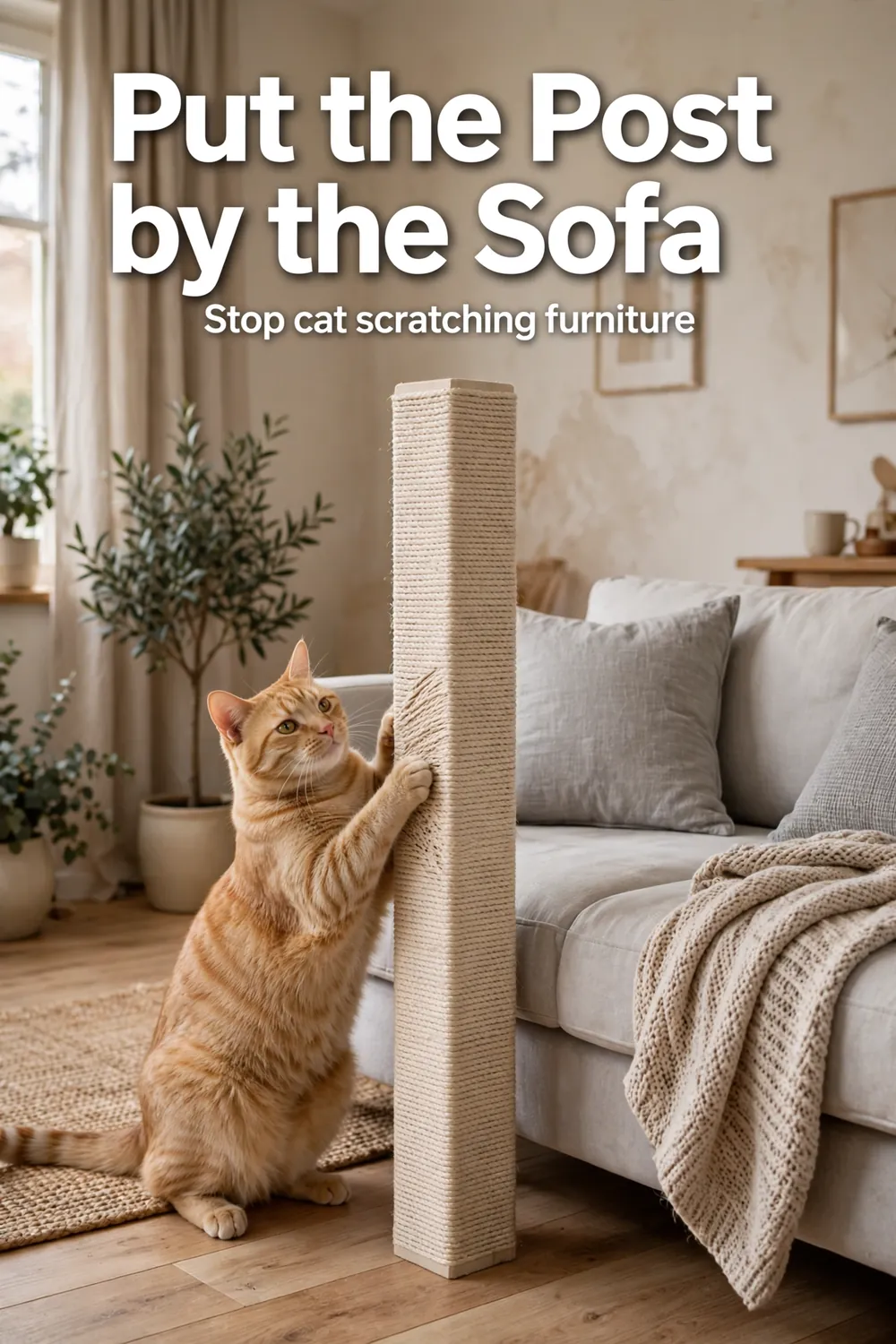
The simplest answer to how to stop cat scratching furniture is this: place a tall, sturdy sisal scratching post, like the SmartCat Pioneer Ultimate Scratching Post, right next to the spot your cat already scratches. Usually, that's the arm of the sofa.
Cats scratch for real reasons: to stretch, to keep their claws in shape and to leave their scent. You can't train that need away, but you can give it a better target. Make the post more satisfying than the couch, and put it exactly where the action is.
Why cats scratch furniture in the first place
Scratching lets a cat stretch its whole body, shed the worn outer layer of its claws and mark territory with scent glands in its paws. Cats often scratch right after waking up and near places that matter to them: sleeping spots, doorways and the room where the family hangs out.
From a cat's point of view, the sofa arm is perfect. It's tall, it doesn't move, the fabric is satisfyingly rough, and it sits in the middle of the household. Most scratching posts fail for the opposite reasons: they are too short, they wobble, they're covered in soft carpet, or they are tucked away in a spare room.
Bored indoor cat signs to watch for
Boredom can turn normal scratching into a lot of scratching. Indoor cats have plenty of energy and fewer outlets for it. Watch for these signs:
- Scratching furniture more often, especially when you're nearby
- Night-time zoomies and racing around the house
- Knocking things off counters and shelves
- Loud, attention-seeking meowing
- Chewing plants, cords or packaging
- Ambushing your ankles
- Sleeping or snacking out of boredom
Some of these, especially overgrooming, hiding or a sudden change in habits, can also point to a health problem, so check with your vet if something seems off. For plain boredom, two short play sessions a day with a wand toy, a window perch and a food puzzle make a real difference. Ending a play session with a scratch on the post is a nice habit too.
Why the post goes right next to the sofa
Cats pick scratching spots by location first. Moving the target a few inches is easy for them to accept; moving it across the room is not. So place the post directly beside, or in front of, the arm your cat uses most. Yes, it's in the living room. That's the point.
The post itself needs three things:
- Height: enough for a full stretch with front paws high. A 32-inch post suits most adult cats.
- Stability: a wide, heavy base so it never wobbles. One tip-over can put a cat off for good.
- Texture: rough sisal that claws can grip and shred, similar to the feel of upholstery.
How to stop cat scratching furniture, step by step
- Place it: stand the post flush against the sofa arm your cat targets.
- Make the sofa less fun: tuck a throw tightly over the arm, or use furniture tape after testing it on a hidden spot.
- Make the post interesting: rub on a little catnip or silvervine if your cat responds to it, and drag a wand toy up the post.
- Reward it: praise or a small treat every time your cat scratches the post.
- Skip punishment: no yelling or water spray. It adds stress and tends to move scratching somewhere else.
- Trim nails regularly so any slip-ups do less damage.
- Add a second scratcher near where your cat sleeps or by the front door.
- Be patient: once the post is clearly the habit, remove the throw or tape.
Renting? Protect your security deposit
Scratched carpet, door frames, window screens and landlord-supplied furniture can all come out of a security deposit. A sturdy post next to the sofa is a small one-time purchase compared with replacing carpet. A few renter habits help too:
- Take dated photos of every room at move-in, and again at move-out.
- If your cat scratches carpet by a closed door, put a flat scratcher right there.
- Protect corners with a throw or spot-tested tape that removes cleanly.
- Read your lease's pet clause so you know what counts as damage.
Who this is for
- Indoor cats who scratch sofa arms or other upright furniture
- Renters protecting carpet, door frames and furniture
- Adult cats who need a post tall enough to really stretch
Who this is not for
- Cats who prefer scratching flat rugs: add a horizontal cardboard scratcher too
- Cats with sudden behavior changes, overgrooming or limping: see your vet first
- Anyone planning to hide the post in a back room
SmartCat Pioneer Ultimate Scratching Post
- Beige color that blends in next to most sofas
- 32-inch square post with a rough sisal surface
- Square base designed to keep the post steady
- Tall enough for most adult cats to stretch fully
Place it right beside the furniture your cat already scratches.
FAQ
Where should I put a scratching post to stop my cat scratching the sofa?
Right next to the sofa, touching the arm or corner your cat already scratches. Cats choose scratching spots by location, so a post across the room is easy to ignore. Once the habit moves to the post, you can shift it a few inches at a time if you need to.
What are the signs of a bored indoor cat?
Common signs include more furniture scratching, night-time zoomies, knocking things off shelves, loud attention-seeking meows, chewing plants or cords, and sleeping or snacking out of boredom. Sudden changes, overgrooming or hiding can also point to a health issue, so check with your vet.
How tall should a cat scratching post be?
Tall enough for your cat to stretch out fully with front paws high, which usually means around 30 inches or more for an adult cat. It also needs a wide, heavy base, because a post that wobbles feels unsafe to scratch.
How can renters keep a cat from damaging carpet and furniture?
Put a sturdy post next to the furniture your cat scratches, add a second scratcher near doorways, trim nails regularly, and cover vulnerable corners with a throw or spot-tested furniture tape. Take dated photos at move-in so you can document the condition of the unit.
Your cat isn't scratching the sofa to annoy you. Give them a better spot in the same place, and both of you get to keep the couch.